





Applying for a study visa is one of the most important steps in your journey to studying abroad. Every year, thousands of students submit applications with high hopes—but many face rejection due to avoidable mistakes.
The truth is simple:
Embassies don’t just check documents—they evaluate your entire profile.
In 2026, visa officers are more focused than ever on identifying genuine students. This means your application must be clear, consistent, and convincing in every aspect.
In this blog, we’ll provide a complete study visa approval checklist and explain what embassies really look for when reviewing your application.
Why You Need a Checklist
Many visa refusals happen because applicants:
- Miss important documents
- Provide inconsistent information
- Fail to explain their study plans clearly
A checklist ensures that nothing is overlooked and your application remains strong from start to finish.
1. Genuine Student Intent
This is the first and most important factor.
Visa officers ask:
Are you a real student or just using a study visa as a pathway to immigration?
What They Look For:
- Clear academic goals
- Logical study plan
- Strong motivation to study
How to Prove It:
- Choose a relevant course
- Explain your goals clearly
- Stay consistent in all documents
Your intention must be to study—not just to travel.
2. Course Relevance and Academic Progression
Your chosen course must align with your background.
Strong Profile:
- Course matches previous education
- Shows career growth
Weak Profile:
- Unrelated course
- No clear reason for change
Applying to recognized institutions like University of Sunderland or Solent University with a relevant academic background strengthens your case.
Academic consistency builds credibility.
3. Statement of Purpose (SOP)
Your SOP is one of the most critical documents.
Embassies Check:
- Your story
- Your motivation
- Your future plans
A Strong SOP Includes:
- Academic background
- Reason for choosing the country
- Course selection explanation
- Career goals
Common Mistakes:
- Copy-paste SOP
- Generic content
- Lack of clarity
A personalized SOP can significantly increase your approval chances.
4. Financial Proof
Financial documentation is a major decision factor.
Embassies Want to See:
- Ability to pay tuition fees
- Ability to cover living expenses
- Stable financial background
Key Tips:
- Maintain funds consistently
- Avoid sudden deposits
- Provide clear income proof
Financial transparency builds trust.
5. English Language Proficiency
Your ability to communicate in English is essential.
Accepted Tests:
- IELTS
- Other approved exams
What Embassies Look For:
- Required band score
- Valid test results
A strong English score supports your academic readiness.
6. Complete and Accurate Documentation
Even small mistakes can lead to rejection.
Checklist:
✔ Valid passport
✔ Admission letter / CAS
✔ Academic certificates
✔ Financial documents
✔ English test results
Important:
- Ensure all documents are accurate
- Double-check spelling and dates
Accuracy shows professionalism.
7. Consistency Across All Documents
Consistency is one of the most overlooked factors.
Example:
- SOP says one thing
- Interview says another
This creates doubt.
Solution:
- Ensure all information matches
- Review your application carefully
Consistency builds confidence in your profile.
8. Clear Career Goals
Visa officers want to understand your future plans.
Strong Answer:
- Defined career path
- Connection between course and job
Weak Answer:
- “I don’t know”
- “I will decide later”
Your future plan must be realistic and relevant.
9. Explanation of Study Gaps
If you have a gap in your education:
What Embassies Expect:
- Honest explanation
- Supporting documents
Acceptable Reasons:
- Job experience
- Business
- Personal circumstances
Transparency is always better than hiding information.
10. Credibility Interview Preparation
Some applicants are called for interviews.
What Embassies Check:
- Your confidence
- Your knowledge
- Your consistency
Tips:
- Practice common questions
- Stay calm and honest
- Avoid memorized answers
Your communication can influence the final decision.
11. Strong Ties to Your Home Country
Embassies need assurance that you are a genuine student.
How to Show This:
- Family connections
- Career opportunities
- Future plans in your home country
This reduces immigration concerns.
12. Proper Timing of Application
Timing plays an important role.
Best Practice:
- Apply early
- Avoid last-minute submissions
Early applications reflect preparation and seriousness.
13. No Fake or Misleading Information
This is a strict rule.
Never:
- Submit fake documents
- Provide false information
Consequences:
- Immediate rejection
- Possible ban
Honesty is your strongest asset.
14. Understanding Visa Policies
Visa rules change frequently.
What You Should Do:
- Stay updated
- Follow official guidelines
Being informed prevents mistakes.
15. Professional Guidance (Optional but Helpful)
Working with experienced consultants can help.
Benefits:
- Proper guidance
- Error-free application
- Better preparation
But always stay involved in your application.
Common Reasons for Visa Refusal
Let’s summarize the most common reasons:
Weak SOP
Insufficient funds
Unclear career goals
Inconsistent information
Poor interview performance
Avoiding these mistakes increases your success rate.
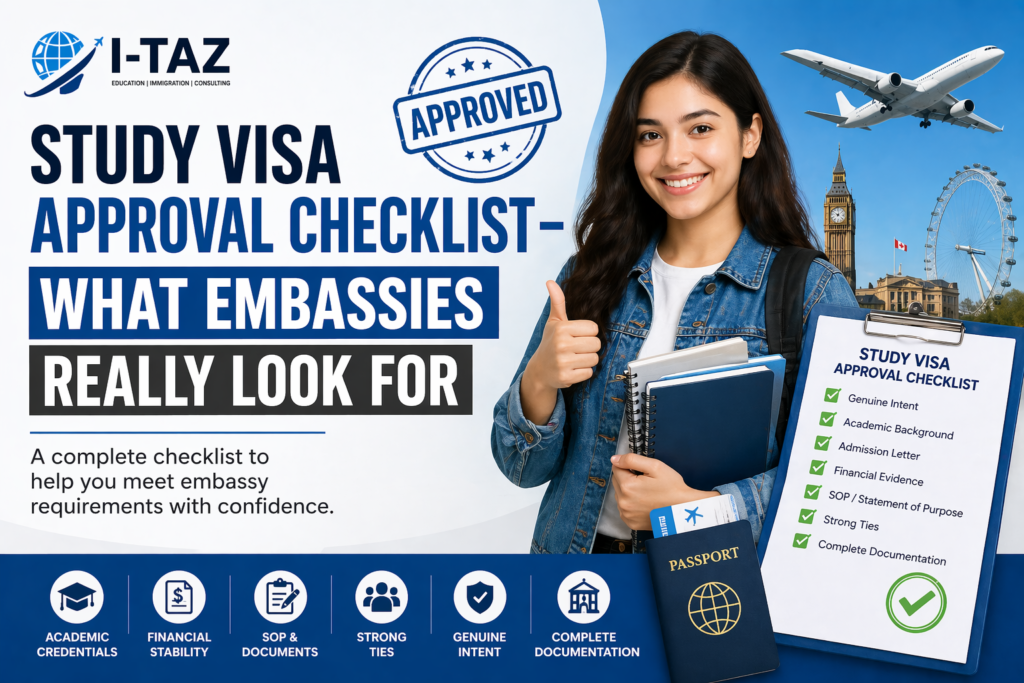
Quick Study Visa Checklist
Before applying, make sure you have:
✔ Relevant course selection
✔ Strong SOP
✔ Verified financial proof
✔ Valid English test
✔ Complete documents
✔ Clear career plan
✔ Consistent information
This checklist can significantly improve your chances of approval.
What Embassies Really Want
At the end of the day, embassies are looking for:
Genuine students
Clear intentions
Financial stability
Academic consistency
They want to approve applicants who:
- Are serious about their studies
- Have a clear plan
- Can support themselves financially
Final Thoughts
A successful study visa application is not about luck—it’s about preparation and strategy.
The difference between approval and rejection often comes down to:
- Attention to detail
- Clarity of purpose
- Strength of profile
Conclusion
If you’re planning to apply for a study visa in 2026:
Follow this checklist carefully
Avoid common mistakes
Build a strong and consistent profile
By doing so, you can significantly increase your chances of approval and move closer to your dream of studying abroad.
Remember:
Embassies don’t just approve documents—they approve confidence, clarity, and credibility.