



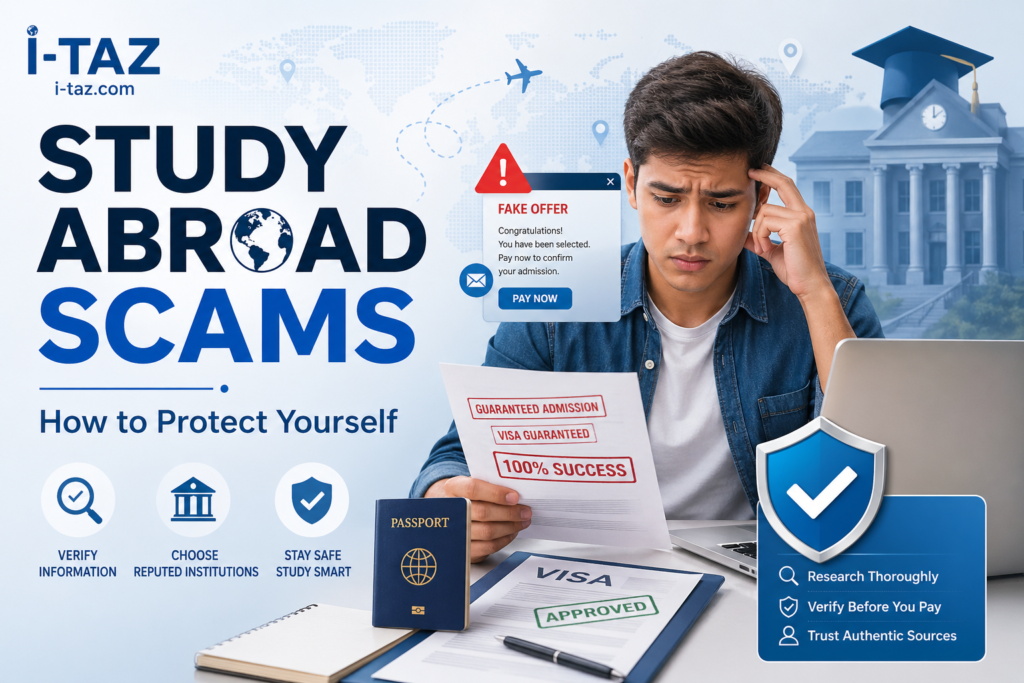
Studying abroad is a dream for thousands of Pakistani students every year. Countries like the UK, Canada, Australia, and Europe attract students with world-class education, global exposure, and better career opportunities.
But unfortunately, where there is demand, there are also scams.
Every year, many students lose money, face visa refusals, or even get trapped in fake admission and immigration schemes because they trusted the wrong people.
The painful reality is:
Many students only realize they were scammed after it’s too late.
That’s why understanding study abroad scams is more important than ever in 2026.
In this blog, we’ll discuss the most common scams targeting students and how you can protect yourself before making any major decision.
Why Study Abroad Scams Are Increasing
The study abroad industry is growing rapidly.
At the same time:
- More students are applying internationally
- Social media marketing has exploded
- Fake consultants can easily appear “professional” online
Scammers take advantage of students who are inexperienced or desperate for quick approvals.
Common Types of Study Abroad Scams
Understanding scams is the first step toward avoiding them.
1. Fake Visa Consultants
This is one of the most common scams.
How It Happens:
Fake consultants:
- Promise “100% guaranteed visa”
- Claim special embassy connections
- Demand large upfront payments
- Use fake office setups or social media pages
Reality:
No consultant can guarantee a visa.
Visa decisions are made by embassies—not agents.
Warning Signs:
Unrealistic promises
No proper documentation
Pressure to pay quickly
Always verify the consultancy before trusting them.
2. Fake University Admission Letters
Some scammers provide fake admission offers.
What Happens:
Students pay fees believing they got admission, only to discover:
- The university never issued the letter
- The course doesn’t exist
- The admission was fake
How to Stay Safe:
Verify admission directly through university websites
Check official email domains
Confirm student ID or application status
Never rely only on screenshots or PDFs.
3. Fake Scholarships
Many students are attracted by “fully funded scholarship” advertisements.
Scam Tactics:
- Ask for processing fees
- Promise guaranteed scholarships
- Use fake government or university logos
Reality:
Genuine scholarships rarely ask for large upfront payments.
Safety Tip:
Always verify scholarships from official university websites.
4. Fake IELTS / PTE Certificates
Some agents offer:
“Without exam” IELTS certificates
Fake language test results
Risks:
- Visa refusal
- Permanent bans
- Legal consequences
Embassies verify everything electronically.
Important Reminder:
Never submit fake documents under any circumstances.
5. Bank Statement Fraud
Some students are encouraged to submit fake financial documents.
Common Fraud:
- Fake bank statements
- Temporary borrowed money
- Manipulated financial records
What Happens:
Embassies conduct verification checks.
Fake financial proof can lead to serious visa bans.
6. Fake Job Promises Abroad
Some scams combine study visas with fake employment offers.
Scammer Promises:
- “Guaranteed part-time job”
- “Easy PR and high salary”
Reality:
No one can guarantee jobs before arrival.
Be careful with unrealistic claims.
7. Social Media Scams
Social media has become a major platform for scammers.
Common Tricks:
- Fake student success stories
- Edited visa approvals
- Fake reviews and testimonials
A professional-looking page does not guarantee authenticity.
What You Should Do:
Research company background
Check physical office
Read real reviews
8. Hidden Charges & Fee Fraud
Some consultants hide charges initially.
Examples:
- Extra “processing fees” later
- Hidden application costs
- Non-refundable deposits
Always ask for complete fee structure in writing.
How to Protect Yourself from Study Abroad Scams
Now let’s focus on the most important part:
Protection.
1. Verify the Consultant Properly
Before choosing a consultant:
Visit the office physically
Check registration details
Ask for official documentation
Review online presence carefully
Trust should be based on proof, not marketing.
2. Never Believe “Guaranteed Visa” Claims
This is the biggest red flag.
Truth:
Visa approval depends on:
- Your profile
- Documents
- Embassy decision
Honest consultants guide you—they don’t guarantee visas.
3. Check University Accreditation
Before applying:
Verify university ranking
Confirm official accreditation
Check course availability
Only apply through recognized institutions.
4. Keep Control of Your Documents
Never hand over original documents carelessly.
Important:
Keep copies of everything
Understand what is being submitted
Read forms before signing
Your documents are your responsibility.
5. Avoid Shortcuts
Many students fall into scams because they want:
- Quick approval
- Cheap process
- Guaranteed results
Shortcuts often lead to bigger problems.
6. Research Visa Requirements Yourself
Even if you use a consultant:
Learn basic visa requirements
Understand embassy rules
Stay informed
Knowledge protects you from manipulation.
7. Be Careful with Payments
Always:
Ask for receipts
Use traceable payment methods
Avoid cash without proof
Financial transparency is important.
8. Talk to Real Students Abroad
Connect with students already studying abroad.
Ask About:
- Their consultant experience
- University life
- Visa process
Real experiences help expose scams.
Psychological Tricks Scammers Use
Scammers often manipulate emotions.
Common Tactics:
- “Limited seats available”
- “Apply today or lose opportunity”
- “Special embassy connection”
Pressure tactics are warning signs.
What to Do If You Have Been Scammed
If you suspect fraud:
Stop payments immediately
Collect evidence
Report the issue
Seek legal or professional help
Acting quickly can reduce damage.
Real-Life Example
Student A:
- Verified consultant
- Checked university directly
- Avoided shortcuts
Successful study visa process
Student B:
- Trusted social media ads only
- Paid without verification
Lost money and faced refusal
Smart decisions protect your future.
Why Genuine Guidance Matters
A trusted consultancy should:
Explain the process clearly
Be transparent about costs
Build realistic expectations
Focus on profile strength—not fake promises
Genuine guidance creates long-term success.
Why Choose i-TAZ?
At i-TAZ, we believe in:
- Transparency
- Honest guidance
- Proper documentation
- Realistic visa strategies
We help students achieve their dreams safely and professionally.
Final Thoughts
Study abroad can transform your future—but only if you take the right path.
Remember:
Verify everything
Avoid shortcuts
Stay informed
Choose trusted professionals
One wrong decision can cost you time, money, and your future opportunities.
Conclusion
If you’re planning to study abroad in 2026:
Research carefully
Protect your documents
Avoid fake promises
Work with reliable consultants
Your dream deserves protection—don’t let scams destroy your future.