







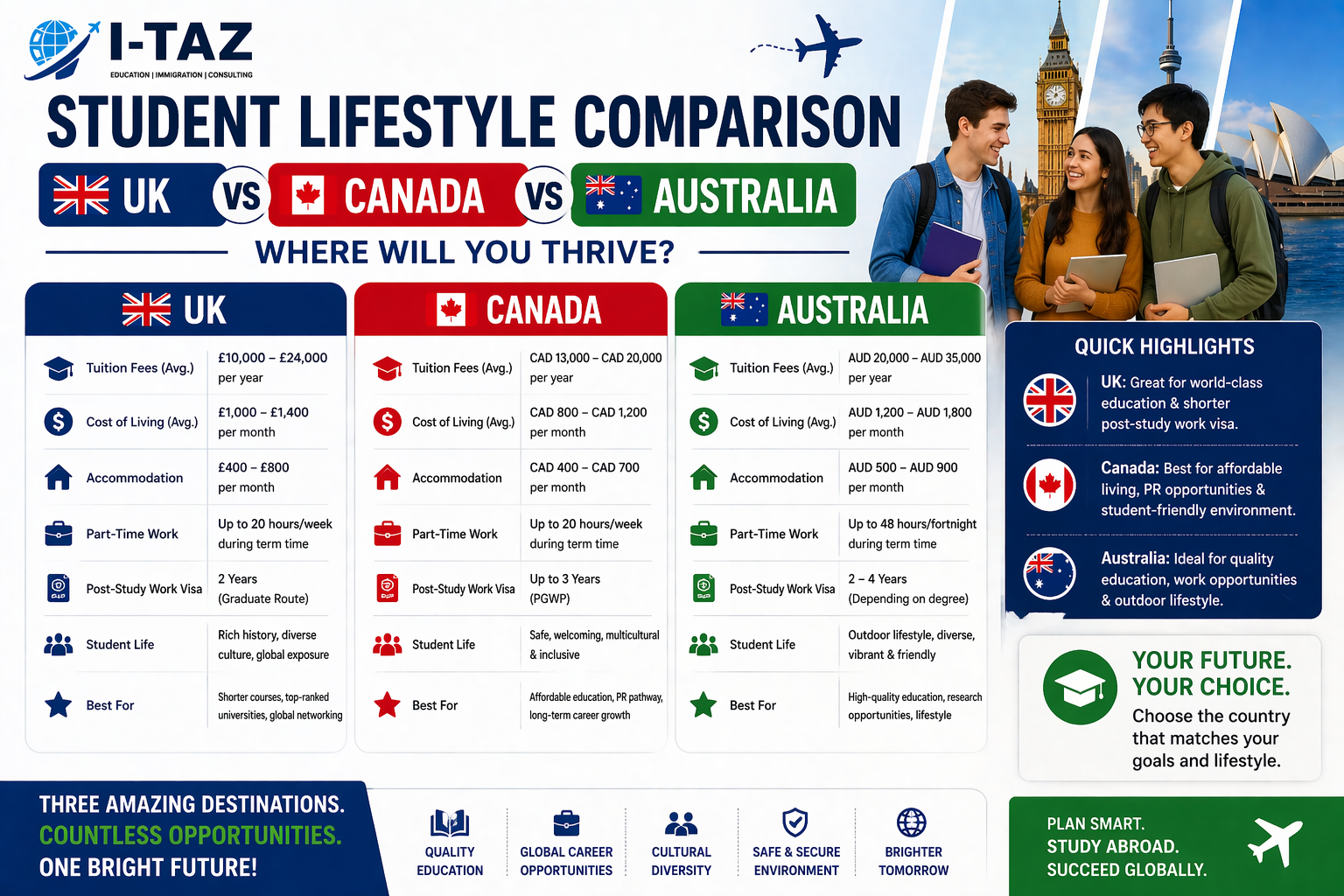
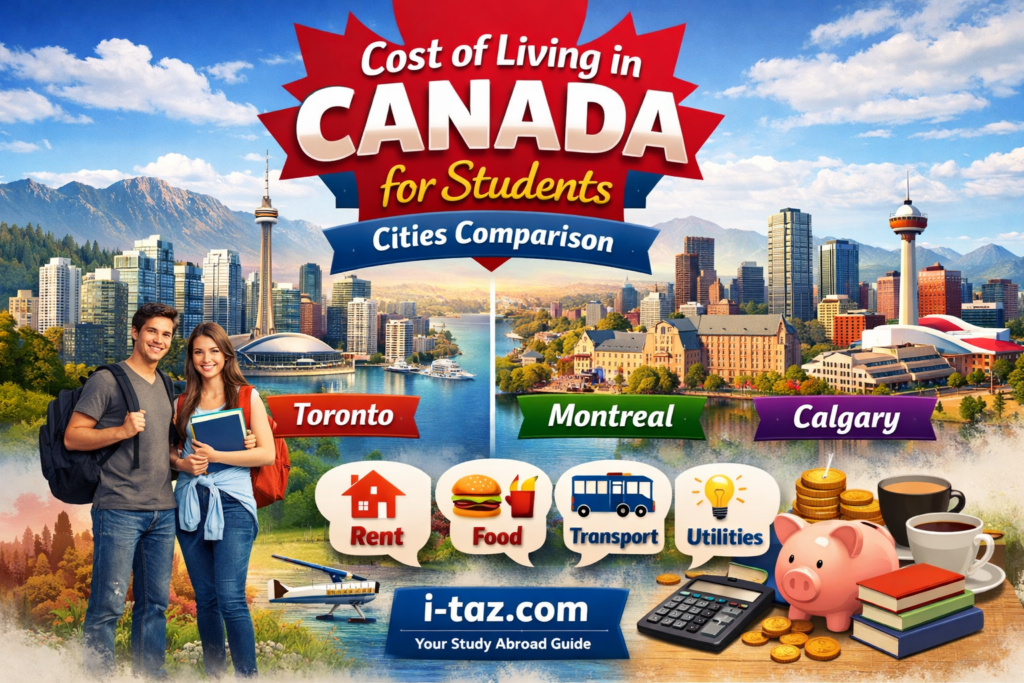
Canada is one of the most popular destinations for international students, especially from Pakistan. While the country offers high-quality education and excellent career opportunities, one of the most important factors to consider is the cost of living.
Understanding how much you will spend monthly — and how it varies from city to city — is crucial for planning your study abroad journey. In this guide, we will break down the cost of living in major Canadian cities, compare expenses, and help you choose the best option according to your budget.
Why Cost of Living Matters for Students
Studying in Canada is not just about tuition fees. Your daily expenses include:
- Accommodation
- Food
- Transportation
- Utilities
- Personal expenses
Managing these costs effectively can make your student life much easier and stress-free.
Average Monthly Cost of Living in Canada (2026)
On average, international students spend:
- CAD 1,000 – CAD 2,500 per month
This depends heavily on:
- The city you live in
- Your lifestyle
- Type of accommodation
Bigger cities = Higher costs
Smaller cities = More affordable living
City-Wise Cost Comparison
Let’s explore the cost of living in major student cities across Canada.
1. Toronto – Most Expensive but Full of Opportunities
Toronto is Canada’s largest city and a major hub for education and employment.
Average Monthly Expenses:
- Accommodation: CAD 800 – 1,500
- Food: CAD 250 – 400
- Transport: CAD 150
- Other expenses: CAD 200 – 400
Total:
CAD 1,400 – 2,500/month
Pros:
- More job opportunities
- Top universities
- Diverse environment
Cons:
- Very high rent
- Expensive lifestyle
Best for: Students who can afford higher living costs and want career exposure
2. Vancouver – Scenic but Costly
Vancouver is known for its natural beauty and high quality of life.
Average Monthly Expenses:
- Accommodation: CAD 900 – 1,600
- Food: CAD 300 – 450
- Transport: CAD 120
- Other expenses: CAD 200 – 400
Total:
CAD 1,500 – 2,600/month
Pros:
- Beautiful environment
- Mild weather
- Strong job market
Cons:
- High cost of housing
Best for: Students who value lifestyle and environment
3. Montreal – Affordable & Student-Friendly
Montreal is one of the most affordable major cities in Canada.
Average Monthly Expenses:
- Accommodation: CAD 500 – 900
- Food: CAD 250 – 350
- Transport: CAD 90
- Other expenses: CAD 150 – 300
Total:
CAD 1,000 – 1,800/month
Pros:
- Lower rent
- Student-friendly environment
- Cultural diversity
Cons:
- French language influence
Best for: Budget-conscious students
4. Calgary – Balanced Cost & Opportunities
Calgary offers a good balance between affordability and job opportunities.
Average Monthly Expenses:
- Accommodation: CAD 600 – 1,000
- Food: CAD 250 – 400
- Transport: CAD 110
- Other expenses: CAD 200 – 300
Total:
CAD 1,200 – 1,900/month
Pros:
- Affordable housing
- Growing job market
- Clean and safe city
Cons:
- Cold winters
Best for: Students looking for affordability with career options
5. Ottawa – Peaceful & Moderate Cost
Ottawa, the capital city, offers a quieter lifestyle with moderate costs.
Average Monthly Expenses:
- Accommodation: CAD 700 – 1,200
- Food: CAD 250 – 350
- Transport: CAD 120
- Other expenses: CAD 200 – 300
Total:
CAD 1,300 – 2,000/month
Pros:
- Safe and peaceful
- Good education institutions
- Moderate living cost
Cons:
- Limited nightlife
Best for: Students who prefer a calm environment
6. Winnipeg – One of the Cheapest Cities
Winnipeg is among the most affordable cities for students in Canada.
Average Monthly Expenses:
- Accommodation: CAD 400 – 800
- Food: CAD 200 – 300
- Transport: CAD 100
- Other expenses: CAD 150 – 250
Total:
CAD 900 – 1,500/month
Pros:
- Very low rent
- Affordable lifestyle
- Less competition
Cons:
- Smaller city
- Fewer job opportunities
Best for: Students with very low budgets
Accommodation Costs Breakdown
Accommodation is the biggest expense.
Types of Housing:
- On-campus residence
- Shared apartments
- Private apartments
Tips to Save:
- Share accommodation
- Live outside city center
- Book early
Transportation Costs
Most cities offer student discounts.
Average Cost:
- CAD 80 – 150/month
Public transport includes:
- Buses
- Trains
- Subways
Food & Grocery Expenses
Monthly Cost:
- CAD 200 – 400
Saving Tips:
- Cook at home
- Avoid eating out frequently
- Shop at discount stores
Part-Time Work Opportunities
International students in Canada can:
- Work 20 hours per week
- Earn CAD 12 – 18 per hour
This can cover:
- Food expenses
- Transport
- Partial rent
Best Cities Based on Budget
High Budget:
- Toronto
- Vancouver
Medium Budget:
- Calgary
- Ottawa
Low Budget:
- Montreal
- Winnipeg
Tips to Reduce Living Costs in Canada
Share accommodation
Use student discounts
Work part-time
Cook your own meals
Choose affordable cities
Final Verdict
The cost of living in Canada varies significantly depending on the city you choose. While cities like Toronto and Vancouver offer better opportunities, they come with higher expenses. On the other hand, cities like Montreal and Winnipeg provide affordable living with decent education options.
Conclusion
Planning your budget is one of the most important steps when moving to Canada as a student. By choosing the right city and managing your expenses wisely, you can enjoy a comfortable and successful student life.
Whether you prefer a vibrant city or a budget-friendly environment, Canada has options for every student. The key is to align your choice with your financial situation and long-term goals.