






Studying abroad is a dream for thousands of Pakistani students. Countries like the UK, Canada, and Australia offer world-class education and excellent career opportunities. However, one major hurdle stands in the way:
Study visa refusal
Every year, many students face rejection—not because they are unqualified, but because they fail to present a strong and convincing application.
In 2026, visa systems have become more strict and selective. Embassies are focusing on genuine students with clear intentions, strong financial proof, and consistent profiles.
So, how can you avoid study visa refusal?
In this blog, we’ll explain the most common reasons for refusal and give you practical strategies to increase your chances of visa approval.
Why Study Visa Refusals Happen
Before learning how to avoid refusal, it’s important to understand why applications get rejected.
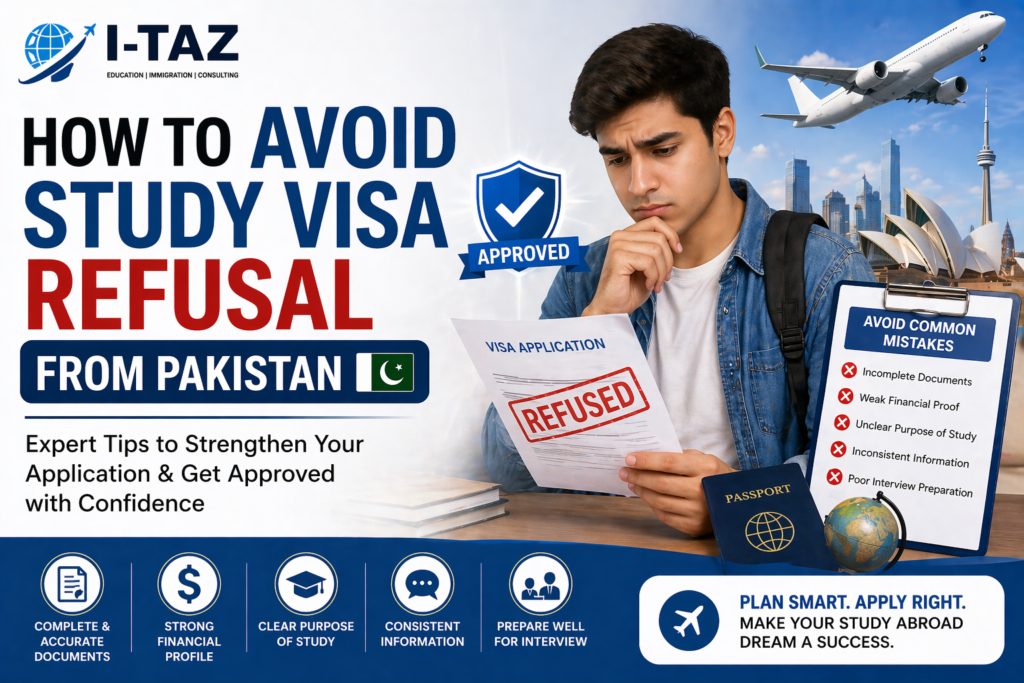
Common Reasons:
- Weak Statement of Purpose (SOP)
- Insufficient or unclear financial proof
- Lack of academic progression
- Inconsistent information
- Poor interview performance
Most refusals happen due to avoidable mistakes.
1. Choose the Right Course
Your course selection plays a major role in visa approval.
Mistakes to Avoid:
- Choosing unrelated courses
- Switching fields without explanation
Best Practice:
- Select a course aligned with your previous education
- Show clear academic progression
Applying to recognized institutions like University of Sunderland or Solent University with a relevant background strengthens your profile.
Your course must make sense.
2. Write a Strong Statement of Purpose (SOP)
Your SOP is your voice in the application.
A Weak SOP:
- Generic
- Copy-paste
- Unclear
A Strong SOP:
- Explains your academic journey
- Justifies your course choice
- Highlights your future goals
A well-written SOP can make a huge difference.
3. Maintain Strong Financial Proof
Financial documentation is one of the most critical factors.
What You Must Show:
- Tuition fees
- Living expenses
- Stable financial background
Common Mistakes:
- Sudden large deposits
- Incomplete documents
- Unclear income sources
Tips:
- Maintain funds for required duration
- Provide clear income proof
Financial transparency builds trust.
4. Ensure Consistency in Your Application
Consistency is key.
Example:
- SOP says one thing
- Documents show another
This creates doubt.
Solution:
- Double-check all information
- Ensure everything matches
Consistency strengthens credibility.
5. Show Clear Career Goals
Visa officers want to know:
What will you do after your studies?
Weak Answer:
- “I don’t know”
- “I will decide later”
Strong Answer:
- Clear career path
- Connection between course and future job
Your goals must be logical and realistic.
6. Avoid Fake or Misleading Documents
This is one of the biggest mistakes students make.
Never:
- Submit fake bank statements
- Provide false information
Consequences:
- Immediate rejection
- Possible ban
Honesty is essential.
7. Prepare for Visa Interviews
Some students are called for interviews.
What to Expect:
- Questions about your course
- Your university choice
- Your future plans
Tips:
- Practice common questions
- Stay confident
- Be honest
Your communication skills matter.
8. Explain Study Gaps Clearly
Study gaps are common—but must be explained.
What to Do:
- Provide valid reasons (job, business, etc.)
- Support with documents
Transparency is better than hiding information.
9. Choose a Recognized University
Your university choice affects your visa chances.
Applying to reputable institutions like University of Sunderland or Solent University adds credibility.
Strong institutions increase trust.
10. Apply at the Right Time
Timing is important.
Mistakes:
- Applying too late
- Rushing documents
Best Practice:
- Apply early
- Prepare everything in advance
Early applications show seriousness.
11. Show Strong Ties to Pakistan
Visa officers need assurance that you are a genuine student.
How to Show This:
- Family connections
- Career opportunities in Pakistan
- Future plans
This reduces immigration concerns.
12. Improve Your English Language Score
Your English proficiency reflects your readiness.
Tips:
- Prepare thoroughly
- Aim for higher scores
A strong score improves your profile.
13. Understand Visa Policies
Visa rules change frequently.
What You Should Do:
- Stay updated
- Follow official guidelines
Being informed prevents mistakes.
14. Avoid Last-Minute Preparation
Rushed applications often lead to errors.
Risks:
- Missing documents
- Weak SOP
- Incomplete financial proof
Start early and plan properly.
15. Work with a Trusted Consultant
Professional guidance can help you avoid mistakes.
Benefits:
- Proper documentation
- Better preparation
- Expert advice
But always stay involved in your application.
Common Red Flags That Lead to Refusal
Unclear study plan
Weak financial proof
Inconsistent information
Lack of confidence in interview
Fake documents
Avoid these at all costs.
What Visa Officers Really Look For
At the end of the day, visa officers want:
Genuine students
Clear intentions
Financial stability
Academic consistency
They are not looking for perfect applicants—but for honest and prepared students.
Quick Checklist to Avoid Refusal
Before applying, make sure you have:
Relevant course selection
Strong SOP
Verified financial documents
Clear career goals
Consistent information
Good English score
This checklist can significantly improve your chances.
Final Thoughts
Study visa refusal is not the end—but it’s better to avoid it in the first place.
The key to success is:
- Preparation
- Honesty
- Clarity
A strong profile reduces risk and increases approval chances.
Conclusion
If you’re planning to study abroad from Pakistan in 2026:
Don’t rush your application
Don’t ignore important details
Don’t rely on guesswork
Instead:
Build a strong profile
Follow proper guidelines
Stay consistent and honest
By doing this, you can confidently move toward visa approval and achieve your dream of studying abroad.
Remember:
Smart preparation today prevents rejection tomorrow.