







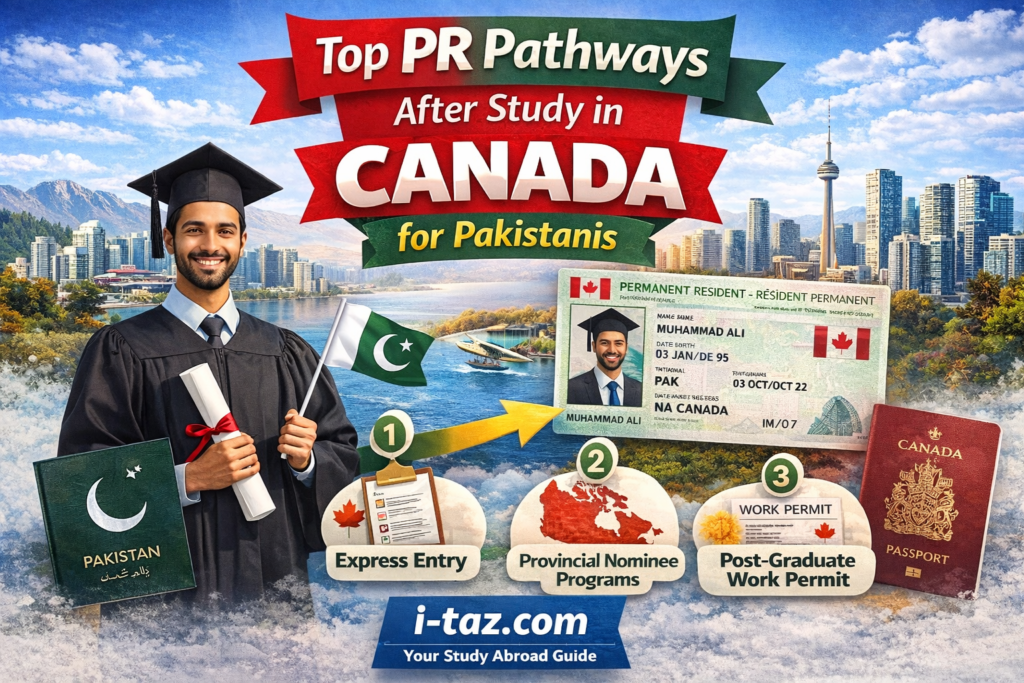
Canada has become one of the most attractive destinations for Pakistani students—not just for education, but for long-term settlement. One of the biggest reasons students choose Canada is the opportunity to transition from a student visa to Permanent Residency (PR).
If you’re planning to Study in Canada for Pakistanis or are already there, understanding the PR pathways after graduation is essential. This guide covers the top immigration routes, eligibility criteria, and expert strategies to help Pakistani students secure PR in 2026.
Why Canada is Ideal for PR After Study
Canada offers one of the most student-friendly immigration systems in the world.
Key Benefits:
- Clear pathway from study to PR
- Points-based immigration system
- High demand for skilled workers
- Multicultural and welcoming society
Unlike many other countries, Canada actively encourages international students to stay and contribute to the economy.
Step 1: Start with a Study Permit
Before applying for PR, you must first:
- Study at a Designated Learning Institution (DLI)
- Complete a recognized program
After graduation, the next step is to apply for a work permit.
Step 2: Post-Graduation Work Permit (PGWP)
The Post-Graduation Work Permit (PGWP) is the most important bridge between study and PR.
Key Features:
- Valid for up to 3 years
- Allows you to work anywhere in Canada
- No job offer required
This work experience is crucial for qualifying for PR programs.
Top PR Pathways After Study in Canada
1. Express Entry System (Most Popular Pathway)
The Express Entry system is the fastest and most common way to get PR in Canada.
Programs Under Express Entry:
- Federal Skilled Worker Program (FSWP)
- Canadian Experience Class (CEC)
- Federal Skilled Trades Program (FSTP)
Canadian Experience Class (CEC)
This is the best option for students.
Requirements:
- At least 1 year of skilled work experience in Canada
- Language proficiency (IELTS/CELPIP)
Why It’s Ideal:
- No need for foreign work experience
- Faster processing
Most Pakistani students apply through CEC after completing PGWP work experience.
2. Provincial Nominee Programs (PNPs)
Each Canadian province has its own immigration programs to attract skilled workers.
Popular provinces include:
- Ontario
- British Columbia
- Alberta
- Manitoba
How PNP Works:
- You apply to a province
- Get nominated
- Receive additional points in Express Entry
Benefits:
- Higher chances of PR
- Suitable for students with lower CRS scores
3. Atlantic Immigration Program (AIP)
The Atlantic provinces offer a special PR pathway for international graduates.
Regions Included:
- Nova Scotia
- New Brunswick
- Newfoundland and Labrador
- Prince Edward Island
Requirements:
- Job offer from a designated employer
- Relevant education
Why Choose AIP:
- Lower competition
- Easier PR process
4. Rural and Northern Immigration Pilot (RNIP)
This program targets smaller communities in Canada.
Key Features:
- Designed to boost rural areas
- Easier eligibility requirements
Requirements:
- Job offer in a participating community
- Willingness to settle in that area
Ideal for students open to living outside major cities.
5. Quebec Immigration Programs
Quebec has its own immigration system.
Popular Program:
- Quebec Experience Program (PEQ)
Requirements:
- Study in Quebec
- French language proficiency
Best for students who can speak French.
6. Employer-Sponsored PR
If you secure a full-time job, your employer may support your PR application.
Requirements:
- Job offer
- Work experience
- Employer support
This pathway depends heavily on your job and employer.
Understanding CRS Score (Express Entry)
The Comprehensive Ranking System (CRS) determines your eligibility for PR.
Points are based on:
- Age
- Education
- Work experience
- Language skills
How Students Benefit:
- Canadian education gives extra points
- Canadian work experience boosts score
Step-by-Step PR Process After Study
Step 1: Complete Your Education
Graduate from a recognized institution.
Step 2: Get PGWP
Apply for a work permit after graduation.
Step 3: Gain Work Experience
Work in a skilled job for at least 1 year.
Step 4: Create Express Entry Profile
Submit your profile online.
Step 5: Receive Invitation (ITA)
If your score is high, you’ll get an invitation.
Step 6: Apply for PR
Submit documents and complete the process.
Common Mistakes to Avoid
Choosing irrelevant courses
Not gaining skilled work experience
Low IELTS score
Ignoring PNP options
Delaying application
Avoiding these mistakes can significantly improve your chances.
Best Courses for PR in Canada
Certain fields have higher PR success rates:
- IT & Computer Science
- Healthcare & Nursing
- Engineering
- Skilled trades
- Business & Finance
Choosing the right course increases your job and PR chances.
Tips to Increase PR Chances
Choose a high-demand field
Study in provinces with PNP options
Improve IELTS score
Gain relevant work experience
Apply early
Why Pakistani Students Succeed in Canada PR
Pakistani students have strong chances of getting PR because:
- English proficiency advantage
- High adaptability
- Strong academic background
- Growing demand for skilled workers
Future Outlook (2026 & Beyond)
Canada continues to increase immigration targets, making it easier for international students to settle.
Expected Trends:
- More PR opportunities
- Increased demand for skilled workers
- Faster processing times
Final Verdict
Canada offers one of the best and most structured pathways from student visa to PR. With the right planning, Pakistani students can successfully transition from study to permanent residency.
Conclusion
If your goal is long-term settlement, Canada is one of the best choices in the world. By following the right pathway—whether through Express Entry, PNP, or other programs—you can turn your student visa into a permanent future.
The key is to:
- Choose the right course
- Gain relevant experience
- Apply strategically
Your journey to PR in Canada starts with the right decisions today.