

For many Pakistani students, studying in the United Kingdom is a lifelong dream. The UK offers internationally recognized degrees, excellent career opportunities, a multicultural environment, and access to some of the world’s leading universities. However, one concern prevents many students from applying: a study gap.
Students often ask, “Can I study in the UK after a gap of one, two, five, or even more years?” The good news is that a study gap does not automatically prevent you from securing admission to a UK university or obtaining a UK student visa. Every year, thousands of international students, including many from Pakistan, successfully begin their educational journey in the UK despite having gaps in their academic history.
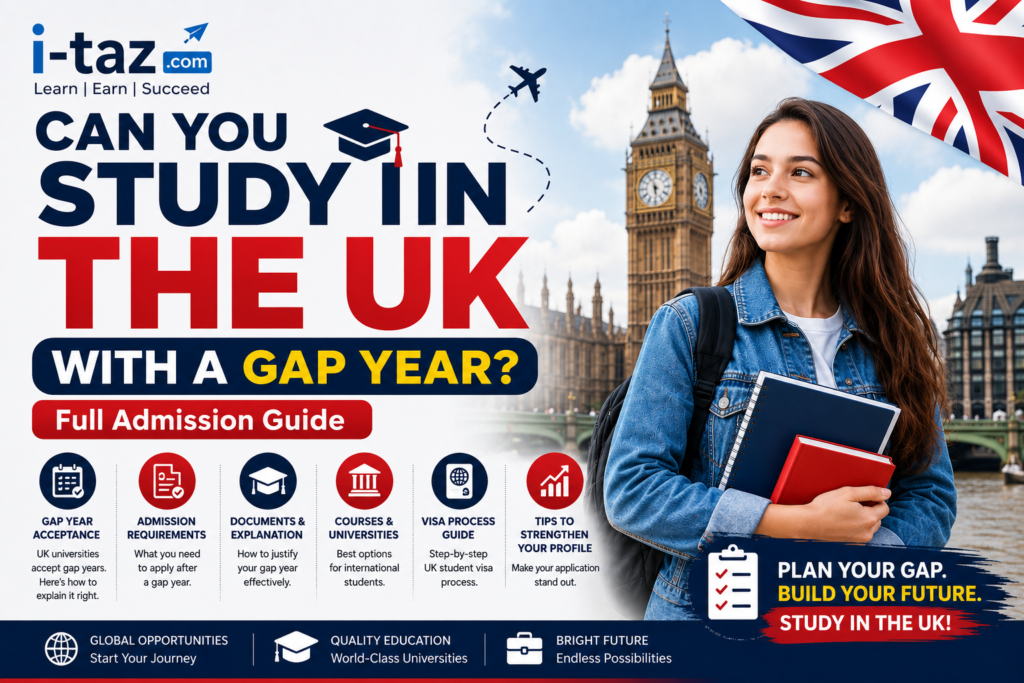
This guide will help you understand how UK universities view study gaps, what documents may be required, how to explain your gap effectively, and how to improve your chances of admission and visa success in 2026.
Understanding a Study Gap
A study gap refers to the period between completing one level of education and beginning the next. For example, if you completed Intermediate in 2022 and plan to start university in 2026, you have a four-year study gap. Similarly, if you completed a bachelor’s degree several years ago and are now applying for a master’s program, that period is considered a study gap.
Many students take a gap due to financial reasons, work commitments, family responsibilities, health issues, business activities, or simply because they needed time to decide on their future career path.
A study gap is not unusual and does not mean your academic journey has ended. In many cases, universities view mature students positively because they often have more life experience and clearer career goals.
Do UK Universities Accept Students with Gap Years?
Yes, UK universities regularly accept students with gap years.
Unlike some countries that place strict restrictions on academic breaks, many UK institutions evaluate students based on their overall profile rather than focusing only on the gap itself. Admissions officers want to understand why the gap occurred and how the student used that time.
If your gap was spent productively, whether through employment, business experience, professional certifications, volunteering, or skill development, it can actually strengthen your application.
The key is being able to explain your gap honestly and show how it relates to your future academic and career objectives.
How Many Years of Gap Are Acceptable?
There is no universal rule regarding the maximum number of gap years accepted by UK universities. Acceptance depends on several factors, including the university, the course, your academic background, and your explanation.
For undergraduate programs after Intermediate, many universities consider students with gaps ranging from one to five years or even longer in certain cases.
For master’s programs, universities often accept students with five to ten years of gap if they have relevant work experience or professional development during that period.
The most important factor is whether you can demonstrate that your chosen course aligns with your academic background and future goals.
Common Reasons for Study Gaps
Universities understand that students may take time away from education for various legitimate reasons.
Employment is one of the most common reasons. Many students work to gain professional experience or save money for their future studies.
Financial preparation is another major factor. International education requires significant investment, and many students spend time arranging finances before applying.
Family responsibilities may also lead to a temporary break from studies. Universities generally understand such situations when properly explained.
Some students use their gap to improve their English language skills, prepare for IELTS or PTE exams, or complete professional certifications related to their intended field of study.
Business ownership and entrepreneurship are also viewed positively, particularly for students applying to business and management-related programs.
Can You Study in the UK After a Gap Following Intermediate?
Yes, absolutely.
Students who have completed FA, FSc, ICS, I.Com, or A-Levels can apply for foundation programs, International Year One programs, or undergraduate degrees even after a gap.
Many universities offer foundation pathways specifically designed for international students. These programs help bridge the academic gap between secondary education and university-level study in the UK.
If you have a longer gap after Intermediate, you may need to provide additional evidence showing how you spent your time and why you are now ready to continue your education.
Can You Study in the UK After a Gap Following a Bachelor’s Degree?
This is one of the most common scenarios among Pakistani students.
Many students complete their bachelor’s degree and then spend several years working before deciding to pursue a master’s degree abroad.
In fact, work experience can be a significant advantage when applying for postgraduate programs. It demonstrates maturity, practical knowledge, and a clear understanding of your career goals.
Students applying for master’s programs should focus on explaining how their work experience connects to their chosen course and how the degree will help them advance professionally.
How to Explain Your Study Gap
One of the most important parts of your application is explaining your gap effectively.
Your explanation should be honest, clear, and professional.
For example, if you worked during your gap, explain what role you performed and what skills you gained.
If you were managing a family business, describe your responsibilities and how the experience contributed to your personal and professional development.
If financial challenges delayed your studies, explain that you spent time preparing financially for international education.
Avoid providing vague answers. Universities appreciate transparency and consistency.
Documents That Can Support Your Gap
Depending on your situation, you may need supporting documents to verify your activities during the gap period.
Examples include:
Employment letters
Experience certificates
Salary slips
Business registration documents
Internship certificates
Professional course certificates
Volunteer work certificates
Medical records if the gap was health-related
These documents help demonstrate that you remained productive during your time away from formal education.
Will a Study Gap Affect Your UK Student Visa?
A study gap does not automatically affect your visa application.
The UK student visa process focuses on whether you are a genuine student with clear academic intentions.
Visa officers may ask questions about your gap during a credibility interview, particularly if the gap is significant.
They may want to know:
Why you took the break
What activities you pursued during that time
Why you have chosen your current course
How the course relates to your future plans
As long as your answers are genuine and consistent with your application documents, a study gap is usually not a major concern.
How to Strengthen Your Application After a Gap
Choose a course that aligns with your academic background and career aspirations.
Prepare a strong Statement of Purpose that clearly explains your educational journey and future goals.
Provide supporting documents that verify your activities during the gap period.
Demonstrate strong English language skills through IELTS, PTE, or other accepted qualifications.
Research universities carefully and apply to institutions that are known to accept students with diverse academic backgrounds.
Most importantly, ensure that your application tells a logical and consistent story about your academic and professional development.
Benefits of Applying with Work Experience
Students often assume that a gap is a weakness, but in many cases, work experience can be a major strength.
Professional experience demonstrates responsibility, maturity, and practical understanding of your field.
Classroom discussions become more meaningful when students can relate theory to real-world situations.
Employers also value graduates who combine academic qualifications with professional experience.
For postgraduate students, relevant work experience often enhances both admission prospects and future employability.
Why the UK Remains a Great Option for Gap-Year Students
The UK education system is known for its flexibility and inclusiveness.
Universities welcome students from a wide range of backgrounds and recognize that educational journeys are not always linear.
Whether you took a gap to work, support your family, run a business, or prepare financially, UK institutions generally focus on your potential rather than judging your past timeline.
This makes the UK one of the most accessible study destinations for students with academic breaks.
How I-TAZ Can Help
At I-TAZ, we understand that every student’s journey is unique. Many successful applicants have study gaps, and with the right guidance, these gaps can be effectively explained and presented.
Our team assists students with:
University selection
Course selection
Application processing
Statement of Purpose writing
Gap justification guidance
Student visa applications
Interview preparation
Pre-departure support
We work closely with students to ensure their profiles are presented professionally and accurately.
Final Thoughts
Having a study gap should never stop you from pursuing your dream of studying in the UK. Universities understand that students take different paths and face different circumstances. What matters most is how you have used your time, what you have learned from your experiences, and how your chosen course fits into your future goals.
Whether your gap is one year or ten years, there are opportunities available for motivated students who can demonstrate genuine academic intentions and a clear vision for their future.
If you are planning to study in the UK in 2026 and are concerned about a study gap, the best approach is to seek professional guidance, prepare your documents carefully, and apply with confidence.
At I-TAZ, we are committed to helping Pakistani students turn their study abroad dreams into reality. Contact our team today and take the first step toward your UK education journey.